Some surnames are quiet. Cisneros is not. It belongs at once to a small town on the Castilian plain, to a line of medieval warlords who served kings, and to countless ordinary families who have carried it across five centuries and two oceans. To follow it is to follow not one story but many, braided together by a single word.
This is an account of how a place-name from northern Spain became a global surname. It makes no attempt to gather every Cisneros into one family tree. Its purpose is the opposite: to understand how the name arose, how it traveled, and why the people who bear it today descend not from one ancestor, but from many.
The place behind the surname
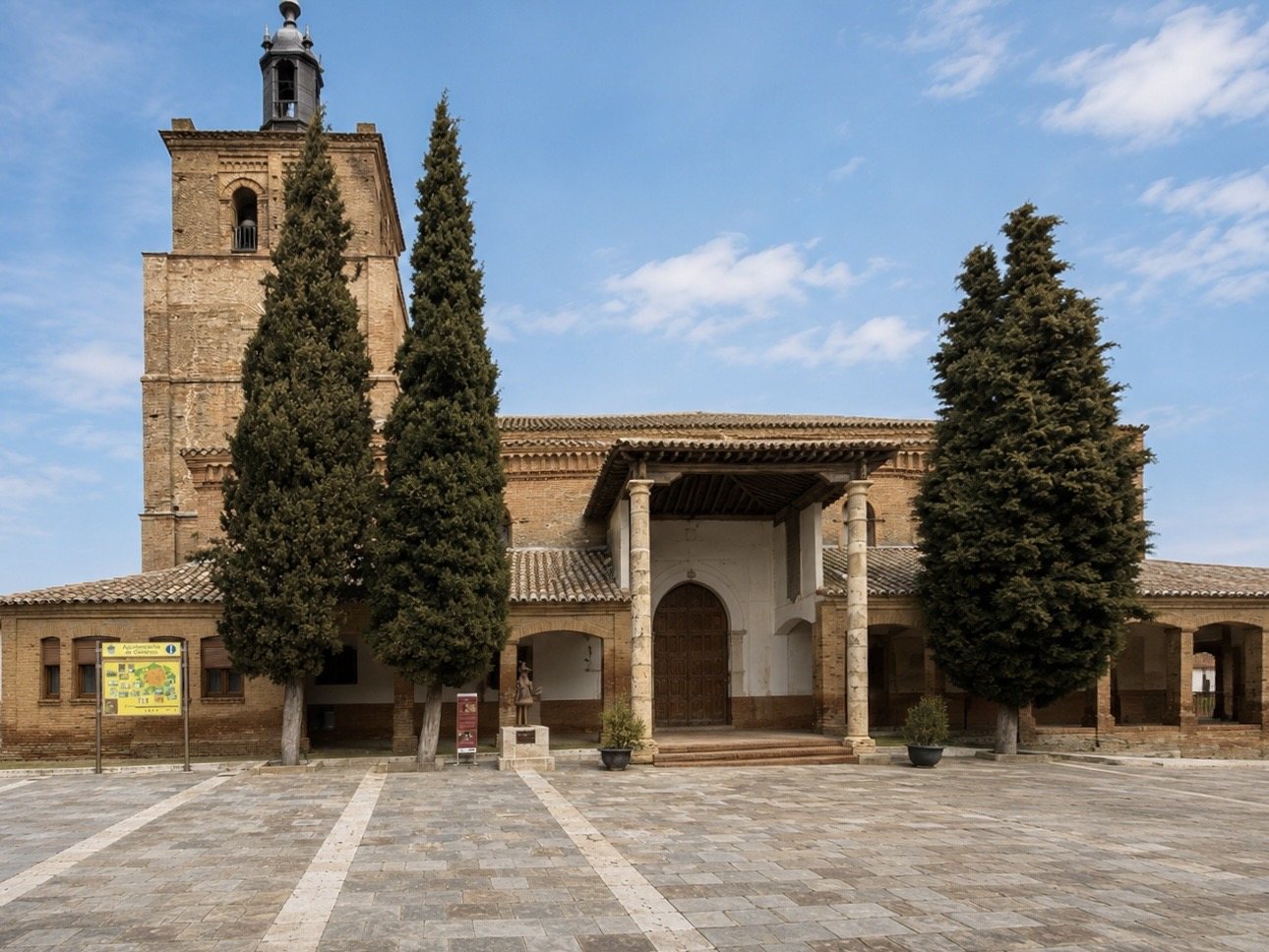
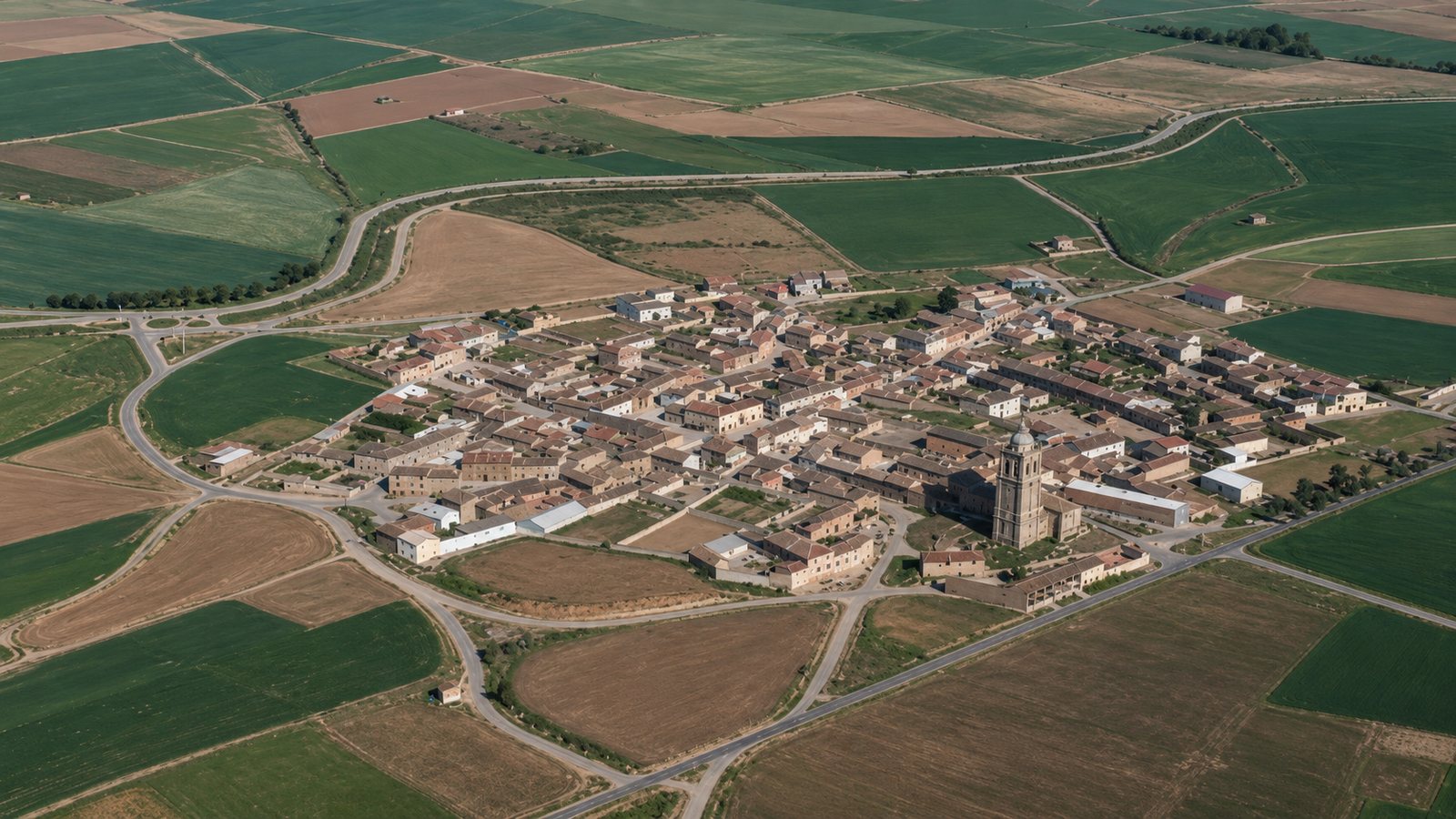
Cisneros sits in the Tierra de Campos, the vast, wheat-colored plain that the old chronicles called the “Campos Góticos”, in the province of Palencia, in Castile and León. It is a country of immense horizons and few trees, of villages drawn tight around a church tower, worked without pause since the Middle Ages.
The town is old, and documented. Archaeology places settlement here as far back as the Bronze and early Iron Ages. Its name appears in writing by the tenth century: a charter of the great monastery of Sahagún, dated 946, records it as “Cinisarios”, and eleventh-century documents give “Ciniseros”. Through the Middle Ages it was a villa de behetría, a settlement holding the rare Castilian right to choose its own lord, within the merindad of Carrión. Known for centuries as “Villa de Cisneros de Campos”, it passed at last to the Crown in the sixteenth century.
Even the meaning of the name is contested, and the argument is worth knowing. The popular and heraldic tradition ties Cisneros to “cisne”, the swan, recalling the waterbirds of the nearby wetlands of La Nava; to this day, swans appear on the town's coat of arms. Scholars of place-names, however, more often favor a humbler root: the medieval Latin “cinisa”, from classical “cinis”, meaning ash. Read that way, the early form “Cinisarios” points to a settlement raised again over old ashes, after fire. The swan is the story the town loves. The ash is the one the philologists tend to trust. Both, in their way, belong to the name.
A surname from a place does not mean one family
Here lies the point on which this entire project turns. A surname taken from a place does not gather its bearers into a single bloodline. And Cisneros proves it twice over, because from the same town rose two very different kinds of Cisneros.
The first was noble. By the thirteenth and fourteenth centuries there was a distinguished lineage of Cisneros, a house linked to the powerful Girón and counted among the ricoshombres, the highest rank of Castilian nobility. Its most brilliant figure, Juan Rodríguez de Cisneros, was lord of Cisneros, Castrillo, and Guardo, and rose to Adelantado Mayor de León in 1358, a great officer of the crown. Later, the related Jiménez de Cisneros, who took their name from the same town, would give Castile its most famous bearer of all: Cardinal Francisco Jiménez de Cisneros (1436 to 1517), Franciscan friar, Archbishop of Toledo, and twice regent of the kingdom.
The second kind of Cisneros was ordinary, and far more numerous. In medieval Castile, to be “de Cisneros” could mean many things: that a person was born in the town, held or worked land there, served a lord connected to it, or was simply known, once they had moved away, by the place they had left behind. None of that required kinship with the Adelantado or the Cardinal. A tenant, a servant, a neighbor, a stranger passing through: each could become “de Cisneros” with no shared ancestor at all. Over generations the “de” fell away, in speech and in the parish book, and “de Cisneros” became, simply, “Cisneros”.
So two families bearing the name today may descend from a common forefather, or from none. The surname alone cannot say. That uncertainty is not a problem to be waved away. It is the very question worth answering.
The old Castilian road widens
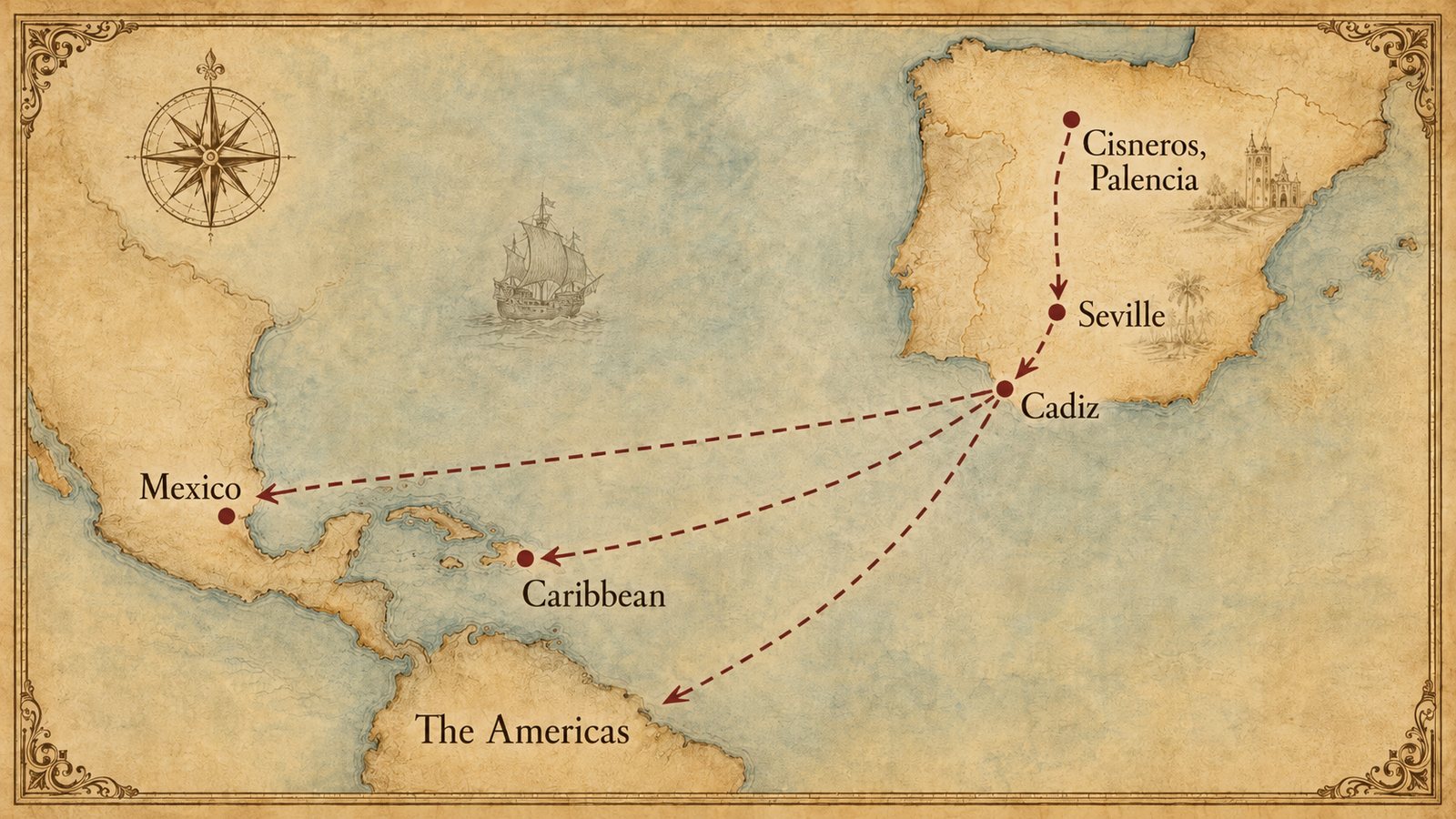
From Palencia, the name moved. Across the centuries, Cisneros families appear in other regions of Spain, among them Andalusia in the south, carried along the ordinary currents of Castilian life: royal and noble service, marriage, trade, ambition, and the slow gravitation of families toward the great cities.
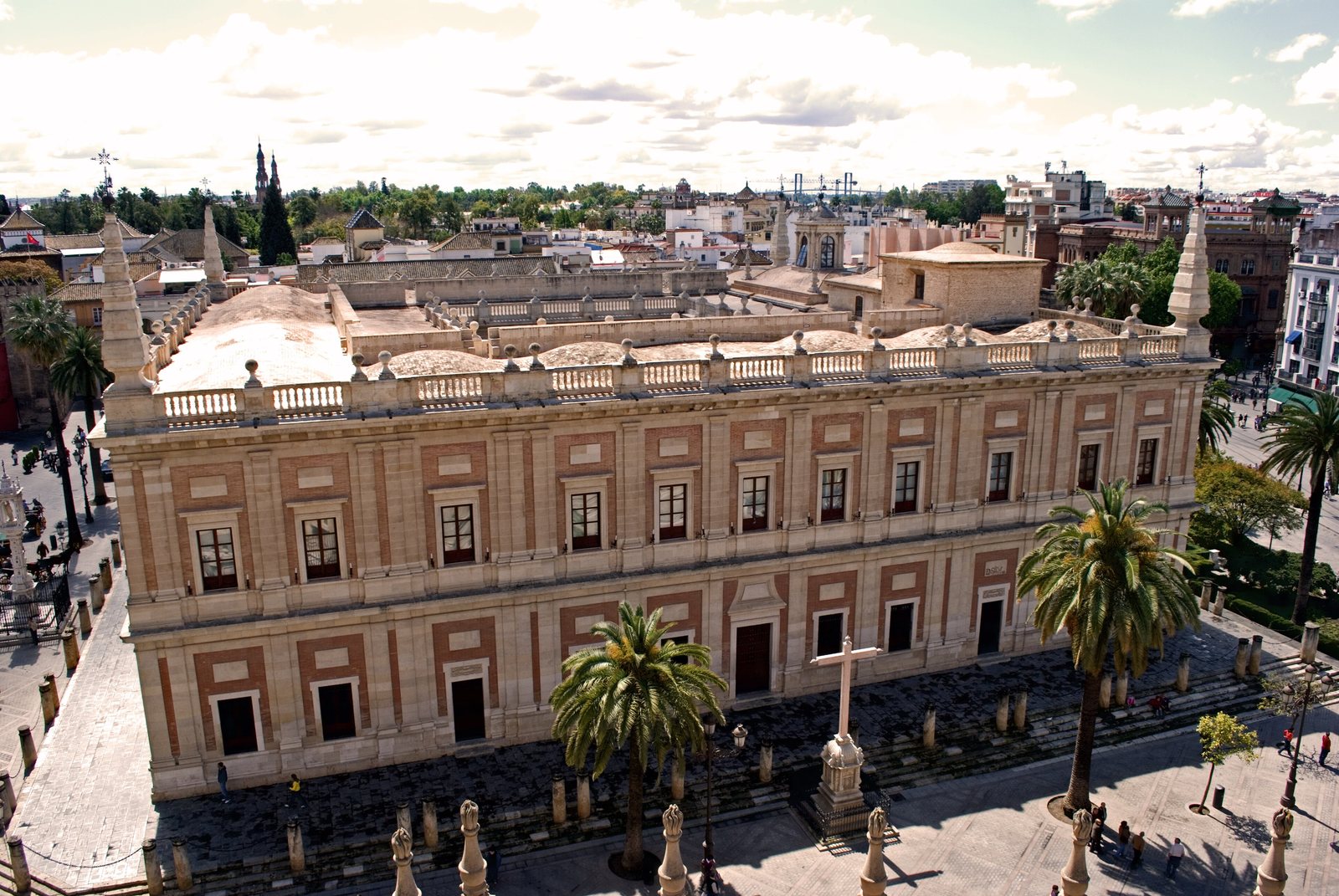
One city mattered above the rest. Seville, on the Guadalquivir, became the single gateway between Spain and the Americas. In 1503 the crown established there the Casa de la Contratación, the House of Trade, which licensed and recorded nearly everyone who sailed for the Indies and controlled the wealth that returned. For more than two centuries Seville held that monopoly, until it passed downriver to Cádiz in 1717. The paperwork of that vast enterprise, the passenger licenses, the ships' registers, the endless correspondence of empire, survives today in the Archivo General de Indias, one of the richest documentary bridges between the Old World and the New.
Yet it would be a mistake to picture every Cisneros passing through a single door. Some sailed from Seville, some later from Cádiz, some by routes that left fainter traces. The road into the Atlantic did not narrow to one gate. It widened.
One surname, many American stories
In the Americas, Cisneros tells no single story. It tells hundreds.
Some Cisneros families reached New Spain, in what is now Mexico, during the colonial centuries. Others settled in the Caribbean, in Central America, and across South America, from the Andes to the far south. Some came early, in the first generations of Spanish settlement; many came far later, including the families who crossed into the United States, and above all the Southwest, where the name is often written Sisneros.
Picture the surname, then, not as a single tree grown from one root, but as a forest. Some of its trees stand close together and share the same soil. Others rise far apart, seeded by entirely separate hands. All of them bear the same name, and that name alone cannot tell you which is which.
Across the Pacific: the Cisneros of the Philippines
There is a second ocean in this story, and it is often forgotten.
For two and a half centuries the Philippines was governed not from Madrid but from Mexico City, as a distant province of New Spain. The link between them was the Manila galleon, which sailed the Acapulco to Manila run from 1565 until 1815. Along it went silver, silk, porcelain, priests, soldiers, and settlers. Many of the men called “Kastila”, Spaniards, in the islands had in fact come by way of Mexico, and the troops and colonists sent out to the Philippine garrisons were commonly recruited in New Spain and Peru and gathered at Acapulco before sailing west. A Castilian surname could therefore reach Manila by a long, indirect road: from Spain to the Americas, and only then across the Pacific.
So there are Cisneros families in the Philippines, and their presence is no accident of coincidence. It is the residue of empire.
But the Philippine chapter carries a further lesson, and it is the sharpest illustration of this whole article's argument. On 21 November 1849, the governor-general, Narciso Clavería y Zaldúa, decreed that Filipinos should adopt fixed family names, and issued the “Catálogo alfabético de apellidos”, a catalogue of roughly sixty thousand surnames, most of them Spanish. Copies were parceled out to the provinces and then to the towns, often alphabetically, so that a family might receive its surname from a list handed to the parish priest. The purpose was administrative: an orderly civil register, a workable census, collectable taxes.
The consequence is profound for anyone tracing a Filipino line. A Spanish surname in the Philippines does not, by itself, imply Spanish ancestry at all. It may have been carried there by a colonist, or it may have been chosen from a printed catalogue in 1849 by a family with no Iberian forefather whatsoever.
Here, then, is the same truth the Castilian plain already taught us, restated on the far side of the world. The surname is a label, not a lineage. And this is precisely where Y-DNA becomes indispensable, because it can distinguish, cleanly and without offense, between a Cisneros paternal line that came out of Spain and one that received an honorable name by another road entirely. Both are real. Both belong in the story. Only the Y chromosome can tell them apart.
What traditional genealogy can show
To tell these stories truthfully, we begin where genealogists have always begun: with the written record. It is patient, unglamorous work, and its sources are extraordinarily deep.
After the Council of Trent closed in 1563, parishes across the Catholic world were required to keep orderly registers of baptism, marriage, and burial, and in Spain and its empire many of those books survive, the oldest continuous record of ordinary families. Beyond them lie the notarial protocols, in which wills, dowries, and sales name relatives and lay bare how a family saw itself; the padrones and lawsuits of hidalguía that tested claims to status; the passenger licenses of the Archivo General de Indias; and military, land, and court records on both sides of the Atlantic.
Together these place a family in a definite time and a definite place. They reveal parentage, marriage, occupation, movement, and the wider social world a family lived within. They are the foundation of everything, and no genetic test replaces them.
What Y-DNA adds to the Cisneros story
Y-DNA follows a single, unbroken thread through that larger weave: the direct paternal line, passed from father to son, generation upon generation, along the very path the surname itself usually travels.
Because of that, Y-DNA can settle a question the documents often cannot. When two men who both carry the Cisneros name test their Y chromosome, the comparison speaks plainly. A close match supports a shared paternal origin, a real family bond reaching back beyond the point where the written record fails. A place on two unrelated branches of the Y-DNA tree shows the opposite: that their paternal lines are distinct, however proudly both families have borne the name for five hundred years.
None of this displaces traditional genealogy. It strengthens it, and puts it to the test. Y-DNA can confirm a link that the documents only hint at, or reveal that two families long assumed to be one are, in truth, two. Paper tells us what people believed and recorded; the Y chromosome tells us what was carried in the blood. The Cisneros story needs both.
From a Castilian town to a global surname
So a name that began in one place on the Castilian plain became, across a thousand years, many families, many migrations, many archives, and many genetic lineages. It has belonged to a cardinal and to laborers, to men who commanded provinces and to men whose names survive only in a single baptismal line.
The aim of this work is not to force those lives into one grand pedigree. It is to recover the real ones: to learn which branches truly join, which stand apart, and how a word born among the wheat fields of Palencia came to be spoken on four continents.
Join the Cisneros Surname Project
If you carry the Cisneros name, or descend from a Cisneros paternal line, you are warmly invited to take part. By pairing traditional genealogy with Y-DNA testing, we are slowly mapping how the surname's many branches relate, and where they divide. Every participant adds another thread of truth to the whole.
Men who carry the Cisneros surname in their direct paternal line are especially encouraged to test, since it is the Y chromosome that preserves this particular story. For one line traced document by document out of Spain, see the Cisneros migration from Seville to Havana to Mexico. But everyone with Cisneros roots is welcome here, and there is a place for you in the work.
One surname. Many roads. The work now is to map them honestly.
Add your branch to the study.
Join the Cisneros Surname ProjectAdd to the record
Do you have a correction, a document, or a family memory that touches this story? Contributions are read personally and are not published automatically. Those that add to the record are published on this page, credited as you wish.