In 2020, as the world shut down during the COVID-19 pandemic, many were left with little time, caught in the chaos of survival, uncertainty, and loss. Others, like myself, were fortunate not only to stay alive, but also to have the rare gift of time: a forced pause that opened the door to self-reflection and inner exploration. I can’t truly pinpoint how the idea to search for my roots arose. Perhaps it was the looming presence of death we all faced on a daily basis that turned my gaze backward instead of forward.
I suddenly became curious about the names, places, and lives that shaped my own. It all started with the basics: old family photos, conversations with relatives, and notes typed into my phone. The process was slow and sometimes unclear but also incredibly rewarding. I spent so many hours a day on it that my wife suspected I was losing it. And very soon, I began to uncover unexpected and fascinating stories that would reshape my understanding of my own family history.
These initial steps opened the door to centuries of forgotten documents and eventually led me into the fascinating world of genetic genealogy. What began as a quiet distraction during a strange and uncertain year turned into a journey that continues to unfold. With my background in biology, diving into the world of DNA felt like a natural extension of my curiosity, giving me the tools to explore not just where I came from, but how the threads of history, genetics, and identity are woven together.
Discoveries Close to Home
Unbeknownst to me, my own grandfather had served in World War II. That alone would have surprised me, but it turned out two of his brothers also served, and both received Purple Heart medals for their bravery. One of them, Enrique Cisneros Cervantes, whom everyone called el Tío Henry, had been a paratrooper in the 504th Parachute Infantry Regiment of the 82nd Airborne Division, which took part in several battles, and he was wounded in two. One military report I found stated that he had been shot through the neck by a machine gun. These were not the kinds of stories I had ever heard around the dinner table.
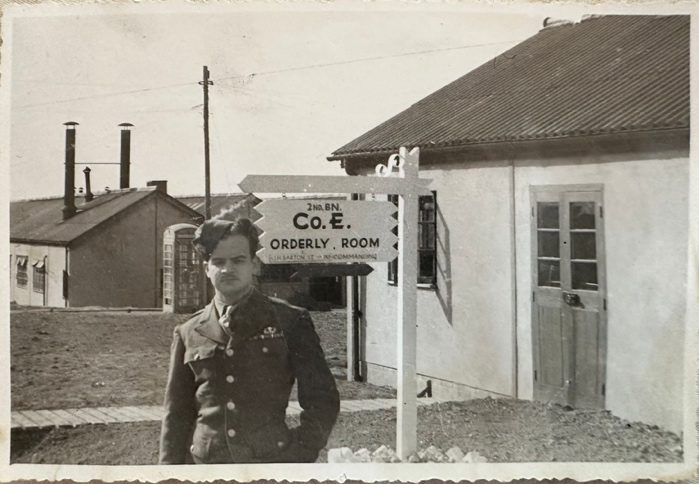
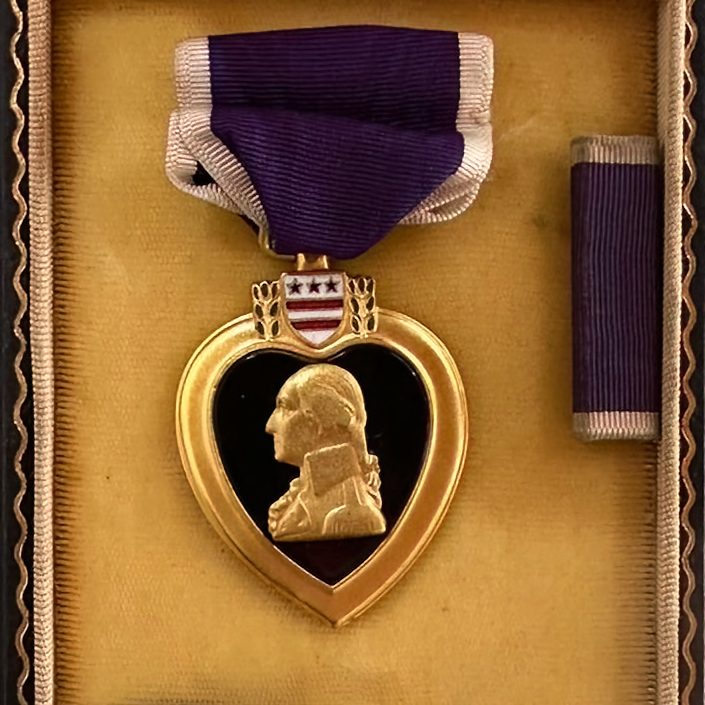
To this day, I’m not sure if my father never clearly mentioned it, or if I was just too busy playing Nintendo at home to pay attention. He would occasionally talk about el Tío Henry, but I never connected the name to a paratrooper who was wounded in WWII. To me, he was just someone my dad seemed fond of. Ironically, I spent part of my teenage years playing World War II video games that recreated the very battles he had fought in, completely unaware that my own family had a real connection to that history. I even watched Saving Private Ryan when it came out in 1998, the same year I turned twenty, still clueless that I had a relative who had lived through a version of what I was seeing on screen. If anything, it turns out I was ignoring the kind of story Hollywood would gladly turn into a feature film.
Maybe I was never exposed to this family history because I grew up far from the rest of the Cisneros family and had little contact with them. Most lived in Southern California, Mexico, or Chicago. I was raised in Miami, the only Cisneros from my branch soaking up the Atlantic breeze, far from the rest of the family whose stories were shared in other corners of the country and beyond. And with family roots in Mexico City, I never imagined my family history would include American war heroes. But that is exactly what I found when I started to dig.
From Branches to Matches
As my tree grew with documents and stories, I became curious about how far I could stretch its branches. I took autosomal DNA tests with FamilyTreeDNA’s Family Finder, and several other companies. Those results helped me grow my tree sideways. I discovered distant cousins, reached out to them, and to my surprise, many responded. Some had valuable information I didn’t have, including one cousin who told me my grandfather’s nickname was ‘El Casanova’, just one of several wild nicknames the brothers seemed to have collected. That probably explains why I still have a few missing aunts and uncles out there. A few even shared photos of ancestors I had never seen before. It was like stumbling into a hidden room in a house I thought I already knew.
While these connections added incredible depth to my understanding of extended family, what I really wanted was to go further back, to follow my paternal line beyond the paper trail. That is what led me to FamilyTreeDNA and its Y-DNA test. I wasn’t just looking for more cousins. I wanted to find the men behind the name and see how far back the Cisneros line could truly go.
An Unexpected Article, A Familiar Name
The breakthrough came in the most unexpected way. I was reading a New York Times article titled To Seville With Love, written by a Mexican-American author, Sandra Cisneros, who happened to share my surname. The article was about her journey to Spain to connect with her ancestral roots. At the time, I had no idea I had a fairly recent paternal connection to Spain. But as I kept reading, something unusual began to happen. She mentioned her great-grandfather being a composer, and I immediately realized that my Cisneros second great-grandfather was a composer too. The names she mentioned, the places she visited, and the ancestors she described were mine too.
By the end of the article, I was staring at my own family history laid out in a national publication. Somehow, a cousin I never knew I had was writing about our shared past. And to add another twist, I realized that this same writer’s books had been part of my high school English curriculum. My English teachers would even ask if we were related, and since I had no idea at the time, I would just shrug and say no. I had unknowingly studied the work of a relative, completely unaware of the connection. That article opened the door to Spain for me, and specifically to Seville, where I would soon begin tracing my paternal line even further back in time. Then I discovered that her lineage had been professionally researched for a PBS episode of Finding Your Roots, and because we shared a common ancestor, I was able to use those findings as a starting point. I tracked down the same names online, found records, and slowly began piecing together the documentation myself. What I uncovered inspired me to travel to Seville and keep digging. My Cisneros ancestors from Seville turned out to be highly influential, and I eventually learned that my fourth great-grandfather, Jorge de Cisneros y Durán Sotomayor, served as a medical advisor to the Spanish military.
Seville and the Search That Found Me
Standing in Seville for the first time with my wife, with the warm sun hitting the same stones my ancestors once walked, I felt a strange mix of familiarity and disbelief. What began as quiet curiosity during lockdown had now taken me across the ocean in search of more. And Seville did not disappoint.
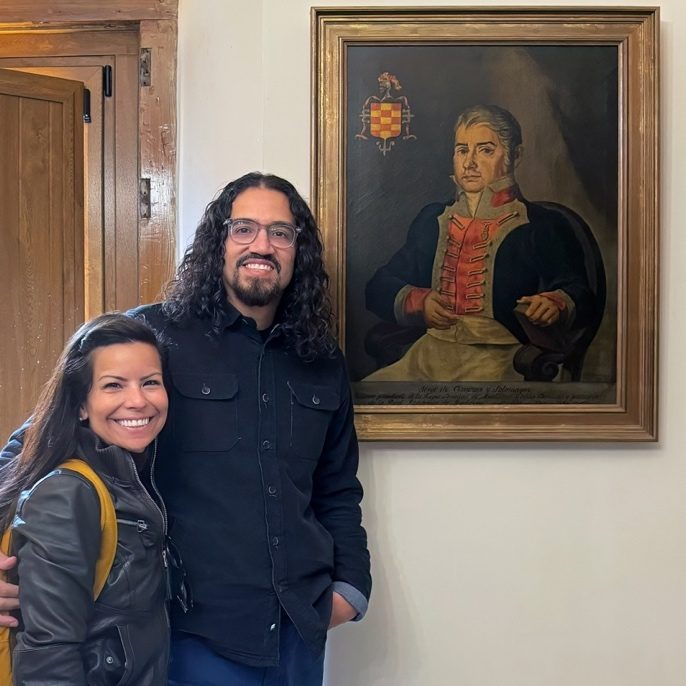
Through continued research, I uncovered that Jorge de Cisneros y Durán Sotomayor was not only a medical advisor to the military, but also the first president of the Real Academia de Medicina y Cirugía de Sevilla. His name appeared in the institution’s earliest records, and to my astonishment, I found a portrait of him still hanging on the wall of the academy. It was one of those moments where history suddenly becomes personal. In the process, I also discovered a family pantheon located in El Cementerio de San Fernando de Sevilla, where my fourth great-grandfather was laid to rest alongside several of his descendants. As we made our way out, just outside the gate of the cemetery, my wife noticed a Euro cent coin on the ground. Curious, we picked it up and later looked into its markings. That small detail, and what I came to learn about it, unexpectedly became one of the signs that pointed me toward my next destination to Northern Spain.
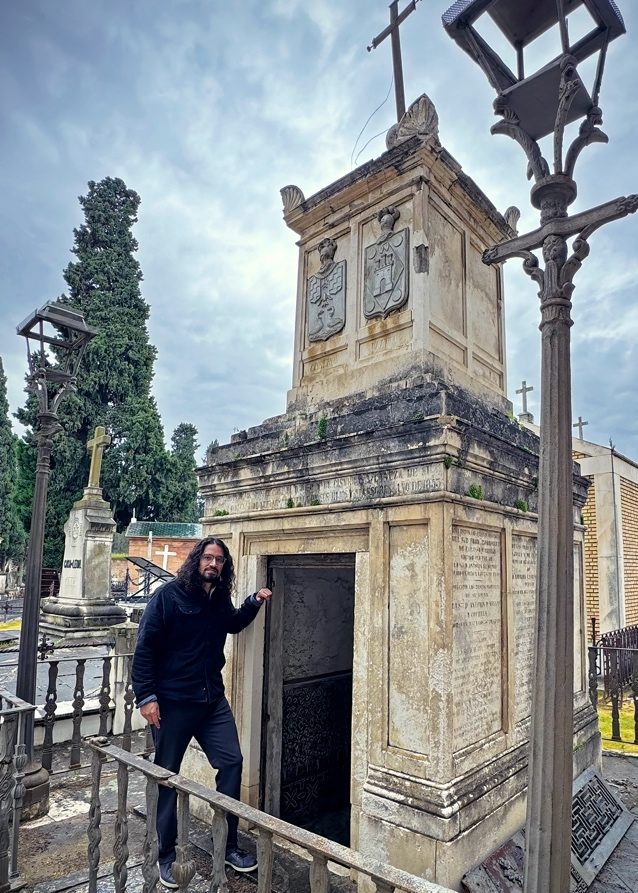
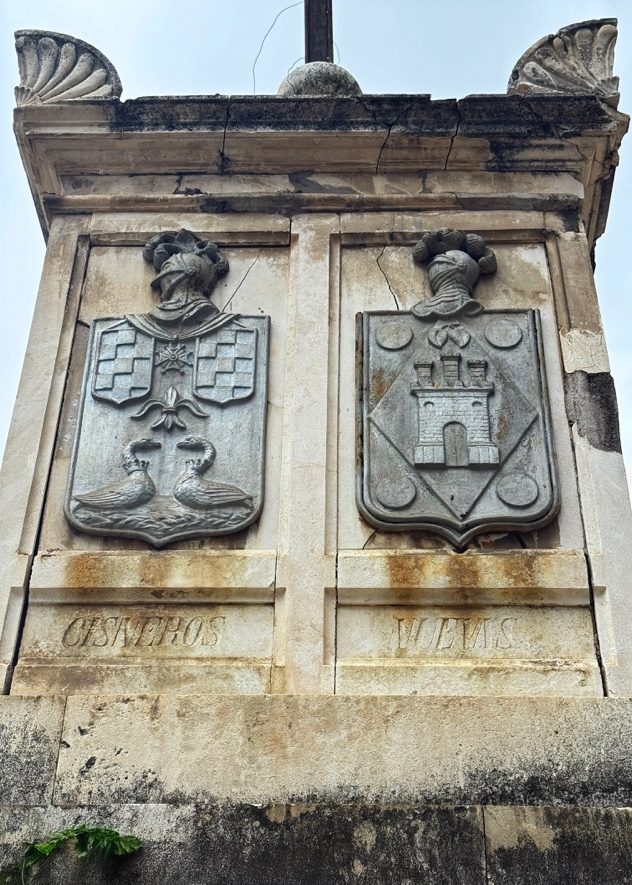
There are too many details to capture here. The chain of events, the timing, the people I met: they are the kind of stories that go beyond the scope of this blog post and probably belong in a book. And somehow, through old records, quiet intuition, and a few well-timed coincidences, I found myself in Seville, not just standing in a place but stepping into a story that had been waiting for me all along.
I am not a superstitious person, but Seville was full of uncanny coincidences that both my wife and I witnessed firsthand. Unexpected conversations, spontaneous detours, and chance encounters led me to documents and details I might never have found otherwise. One of those moments was so striking, it ultimately inspired a second trip, this time to the town of Cisneros in Palencia, the very place that gave my surname its name. The town’s name is believed to derive from the Spanish word cisne (“swan”), referring to the flocks that once graced its marshes and ponds, so much so that the name has long been read as “place of swans”.
The Town That Sent for Me
By this point I had taken the Big Y-700 test with FamilyTreeDNA. My terminal haplogroup was E-FTF57759, which hinted at possible Jewish roots in Spain. It confirmed my connection to my second great-grandfather, Jorge Enrique Cisneros, through a third cousin who shares that same descent, proving my genetic link to Mexico City, where Jorge Enrique was born in 1860. Still, I needed to confirm my Cisneros patrilineal connection to Spain itself.
This yearning to learn more drove me to take another trip to Spain, this time taking an FTDNA kit with me. I stayed in Madrid and Toledo, but on the day before last, I decided I needed to take a day trip to Cisneros, Palencia. With no plan in mind, I rented a car and decided to make the three-hour drive north to the town of Cisneros in Palencia.
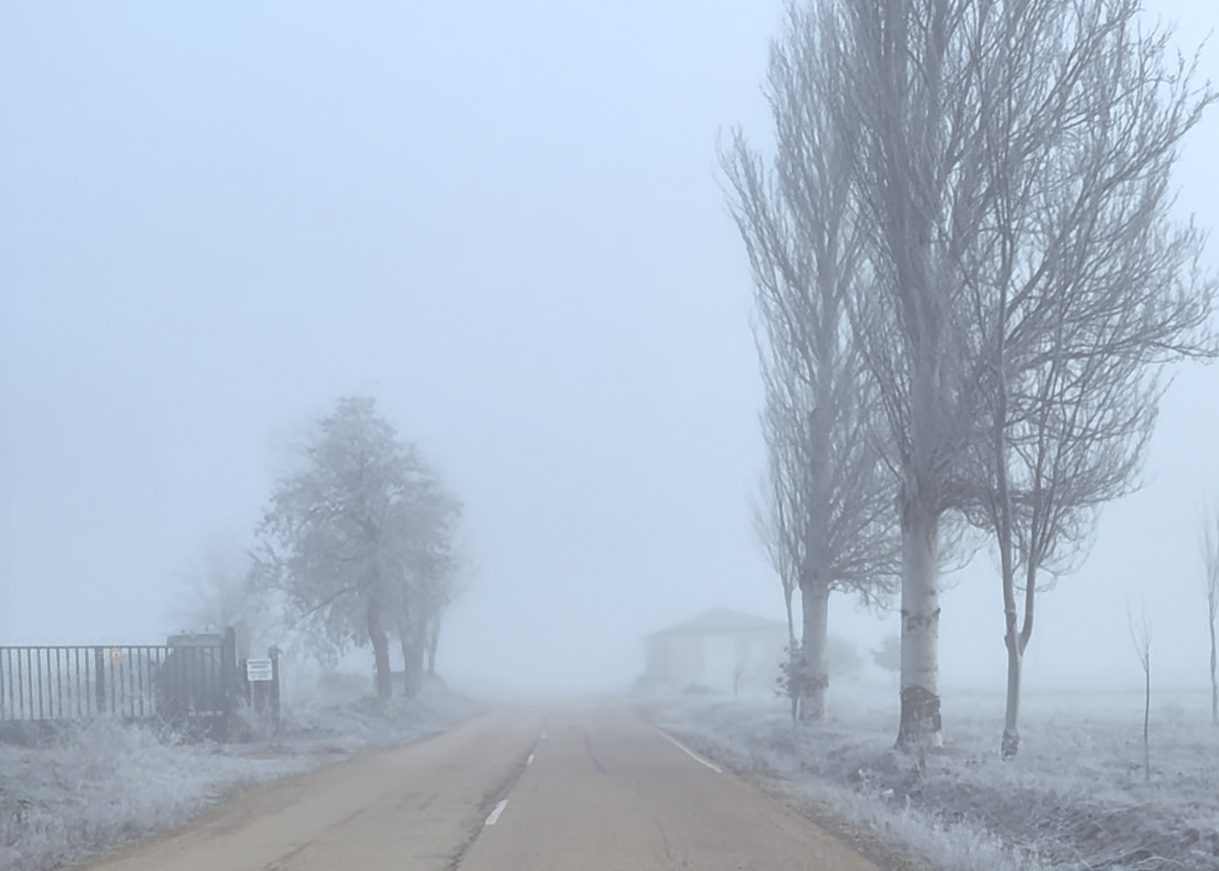
The last hour of the drive took me through dense fog. Visibility dropped so low it felt as though I had crossed into something unreal, like I had entered a spirit realm. The trees and fields were cloaked in white, adding to the otherworldly silence. When I arrived, the fog lifted. The town appeared like something from a fairytale. And as I pulled in, a local greeted me with warmth, almost as if I had been expected.
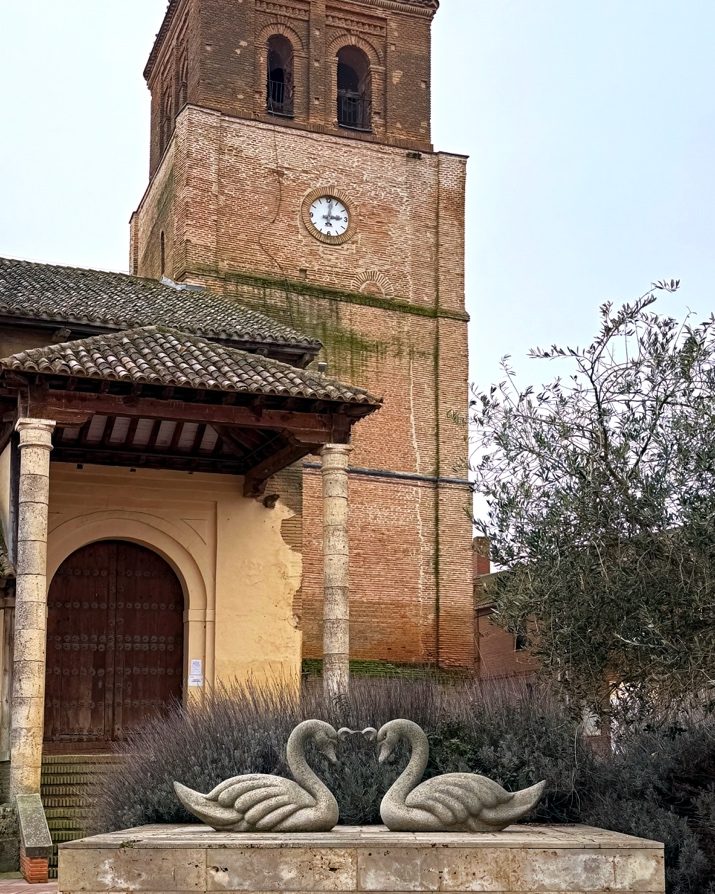
I walked the narrow streets, spoke with townspeople, and eventually met the mayor. My goal was simple: find someone in Cisneros who carried the surname. What I found went far beyond that. I was introduced to a man whose family had lived in the town for generations. He was ninety-three years old, and he and his family welcomed me, and I discussed the reason for my visit. I explained my research, my role as a co-administrator of the Cisneros surname project at FTDNA, and my hope of collecting a Y-DNA sample from someone whose roots had remained in the town for centuries. To my amazement, he and his family were just as interested. He agreed to take the test.
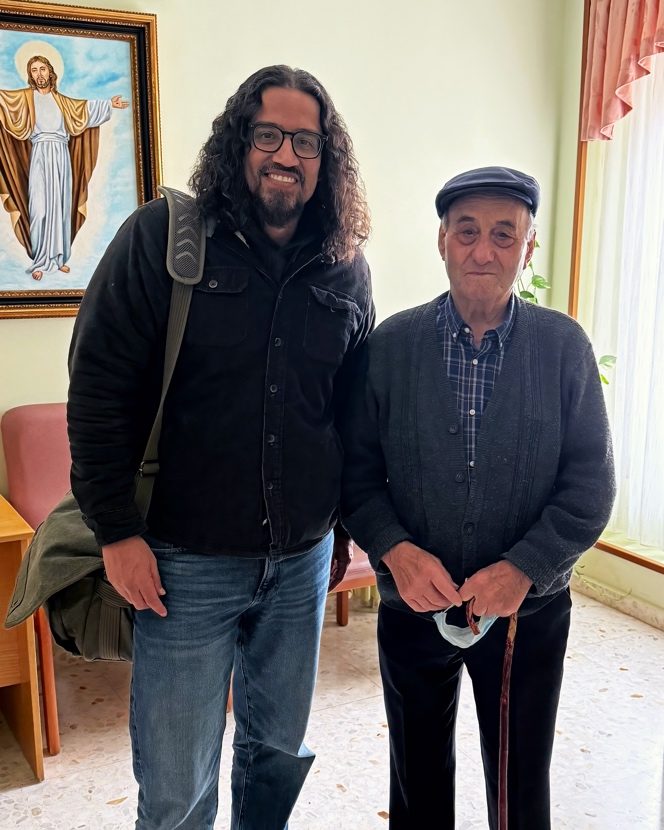
For the first time in my travels, I could not wait to return home!
Weeks later, the results came in. I opened the email, and there it was. He was one of my matches. Our shared Y-DNA pointed to a common male ancestor who likely lived around five hundred years ago. No document, no photo, no archive had given me this. This was something else. It was evidence written in our blood.
The discovery was quiet but powerful. A connection that had once felt abstract was now living, breathing, and real. I had searched through time, bloodlines, and forgotten places, and at the end of it, I stood in the very town that had unknowingly sent me on this journey.
The Thread Remembers
What started as a quiet curiosity during lockdown turned into a search that reshaped how I see my own story. I began by building a simple family tree, unaware that it would one day lead me across centuries, across oceans, and into a forgotten town that happened to share my name.
As someone with a background in biology, I’ve always believed in evidence, in things you can observe and test. But this journey reminded me that not all discoveries come with clear instructions or expected outcomes. Some arrive slowly, through persistence, luck, and the willingness to follow your instincts.
Most of my Cisneros ancestors may not have left behind many written words, but they passed down something even more enduring: a Y-chromosome that has remained nearly unchanged from father to son for centuries. That strand of DNA carried their story forward, quietly crossing generations until it found its way to me. When it finally matched another man from the town of Cisneros, it did more than confirm a connection. It revealed that my identity had always been tethered to that distant place, waiting to be recognized. That discovery was not just genetic. It was a quiet reunion with something ancestral, something enduring, something that had never really been lost.
Does your line trace back to Cisneros?
If you carry the Cisneros name, Y-DNA testing can reveal where your paternal line truly fits, and who you connect with across centuries and continents.
Join the Cisneros DNA ProjectAdd to the record
Do you have a correction, a document, or a family memory that touches this story? Contributions are read personally and are not published automatically. Those that add to the record are published on this page, credited as you wish.